Medicinal plants have been used for centuries to boost immunity and promote overall health. These plants contain a variety of bioactive compounds that enhance the immune system’s ability to fight infections and diseases.
Tulsi is the “queen of herbs” because of its healing powers.It is the medicinal plant and has been used in Ayurvedic and Siddha practices more than 3000 years, this ancient herb is known to have a huge significance in the Indian culture. It is native to the Indian subcontinent.
It has been known to treat many different common health conditions such as common cold, lowers blood pressure, helps in respiratory disease, used as an antiseptic, analgesic, and has antioxidant properties.
Giloy is the herb that is used in Ayurveda practices for centuries. In Sanskrit, it is known as ‘Amrita’ which means ‘the root of immortality’ because of its abundant medical properties. Some of the benefits of giloy are: Boost immunity, treat chronic fever, improves digestion, treats diabetes, reduces stress and anxiety, fights respiratory problems, treats arthritis, reduces asthmatic symptoms, improves vision, reduces signs of aging. Giloy is a natural herbal remedy for most of the common health problems.
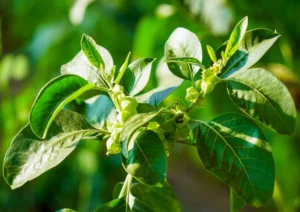
Withania somnifera is a plant from the nightshade family native to the Indian subcontinent. People more commonly know it as ashwagandha, Indian ginseng, or winter cherry. It is the small shrub, with small pale green flower with red berries.
In Ayurveda, people have used Ashwagandha for thousands of years. In Sanskrit, the word Ashwagandha means “smell of horses” (Ashwa-horse and Gandha-smell), describing its distinct horse-like smell. This shrub has many healing medicinal properties. Some of the health benefits of Ashwagandha are: reduces blood sugar levels, Anti-carcinogenic , Improves heart health, boosts immunity, reduces cortisol levels and stress, helps in muscle building.
Aloe vera is a succulent plant species. It is an evergreen perennial,
It is an evergreen perennial that originates from the Arabian Peninsula. However, it grows wild in tropical and semi-tropical regions around the world. People mainly cultivate it for medicinal uses and widely use it as herbal remedies for skin conditions. This is because people know the gel-like components of the plant heal the skin from a variety of minor ailments.
Immune-boosting polysaccharides pack Aloe Vera, helping the immune system to behave properly. Aloe vera juice helps in so many ways to increase immunity in the immune system.
How Casinozoid Evaluates Payment Security Standards for Australian Casino Players
When Australian players choose an online casino, the question of payment security rarely receives the same scrutiny as game variety or bonus terms. Yet the mechanisms behind deposit and withdrawal processing carry significant financial and personal risk if not properly vetted. Casinozoid, a casino review platform focused on the Australian market, has developed a structured methodology for assessing how well a casino’s payment infrastructure protects its users. Understanding that methodology helps players make more informed decisions about where they deposit their money and which payment methods they trust with their financial data.
The Regulatory and Licensing Framework That Underpins Payment Safety
Casinozoid’s evaluation process begins not with the payment methods themselves, but with the licensing jurisdiction under which a casino operates. This matters because licensing bodies impose specific financial compliance requirements on operators. The Malta Gaming Authority, which updated its Player Protection Directive in 2019, requires operators to segregate player funds from operational accounts — a requirement that directly affects how quickly and reliably withdrawals are processed. Similarly, the UK Gambling Commission mandates that operators demonstrate financial stability and maintain adequate reserves before a licence is granted or renewed.
For Australian players specifically, the regulatory landscape is complicated by the Interactive Gambling Act 2001, which prohibits offshore operators from actively marketing real-money casino services to Australians, but does not criminalise players for using such services. This legal grey zone means that most casinos serving Australian players operate under Curaçao, Malta, or Gibraltar licences rather than any domestic Australian authority. Casinozoid accounts for this by weighting the reputation and enforcement record of each licensing body, not just whether a licence exists. A Curaçao licence obtained before the jurisdiction’s 2023 regulatory overhaul, for instance, is treated differently from one issued under the new Gaming Services Provider framework that came into effect that year.
Beyond licensing, Casinozoid examines whether a casino undergoes independent financial audits. Organisations such as eCOGRA and BMM Testlabs audit not only game fairness but also payout procedures and financial controls. Casinos that publish audit certificates and maintain current certifications receive higher marks in this category. The absence of any third-party financial oversight is treated as a significant negative indicator, regardless of how well-designed the casino’s interface may appear.
How Specific Payment Methods Are Assessed for Security
Once the foundational licensing layer is evaluated, Casinozoid moves to the payment methods themselves. The assessment here is technical and specific rather than surface-level. For card payments, the platform checks whether the casino complies with PCI DSS (Payment Card Industry Data Security Standard) Level 1, the highest tier, which requires annual on-site audits by a Qualified Security Assessor and quarterly network scans. Many smaller operators claim PCI compliance without specifying which level, a distinction that matters considerably in terms of actual data protection.
For e-wallets and alternative payment providers, the evaluation becomes more nuanced. These services vary widely in their own regulatory standing and fraud protection mechanisms. A question that comes up frequently in player communities — whether is MiFinity safe to use at online casinos — reflects a genuine need for clarity about how newer or less mainstream payment providers handle transaction security, identity verification, and dispute resolution compared to established options like PayPal or bank transfers. Casinozoid addresses this by examining each provider’s own licensing status, the jurisdiction in which it holds its electronic money institution (EMI) licence, and whether it applies two-factor authentication and transaction monitoring as standard practice rather than optional features.
Cryptocurrency payments introduce a different set of considerations. While blockchain transactions are inherently transparent and resistant to certain types of fraud, the casino’s handling of crypto deposits and withdrawals introduces custodial risk. Casinozoid evaluates whether casinos hold player crypto funds in hot or cold wallets, whether smart contract audits have been conducted for any blockchain-based games, and how the casino handles exchange rate risk when converting between fiat and crypto. Australian players using crypto should be aware that the Australian Transaction Reports and Analysis Centre (AUSTRAC) has classified digital currency exchanges as reporting entities since 2018, meaning any casino that converts crypto to AUD and back operates within a regulatory framework that carries its own compliance requirements.
SSL Encryption, Data Handling, and Withdrawal Verification Processes
Transport Layer Security (TLS) encryption — commonly referred to by its predecessor name SSL — is the baseline expectation for any legitimate financial website. Casinozoid checks for TLS 1.2 or 1.3 implementation, verifies that certificates are issued by recognised Certificate Authorities, and flags casinos where the certificate has lapsed or where mixed content warnings appear in browser security checks. These are not theoretical concerns: expired or misconfigured certificates have been associated with man-in-the-middle attacks in financial services contexts, and the same vulnerabilities apply to gambling platforms.
Data handling practices extend beyond encryption in transit. Casinozoid reviews each casino’s privacy policy against the requirements of applicable data protection frameworks, including the EU’s General Data Protection Regulation (GDPR) for European-licensed operators and Australia’s Privacy Act 1988, which was significantly amended in 2022 to increase penalties for data breaches and expand the definition of personal information. Casinos that collect biometric data for identity verification — increasingly common as KYC requirements tighten — are evaluated on whether they store this data locally or with third-party processors, and whether those processors are themselves certified to relevant security standards.
Withdrawal verification is where payment security becomes most visible to players. Know Your Customer (KYC) procedures, while sometimes experienced as friction, serve a genuine anti-money laundering function and also protect players by ensuring that withdrawals can only be directed to verified accounts. Casinozoid assesses the completeness and consistency of KYC implementation: whether it is applied at registration or deferred until the first withdrawal request, whether document verification is automated or manually reviewed, and whether the casino imposes withdrawal limits that are not disclosed upfront in its terms and conditions. Delayed or obstructed withdrawals are one of the most common complaints in the Australian online gambling space, and weak KYC implementation is frequently a contributing factor.
Responsible Disclosure and Ongoing Monitoring Practices
Casinozoid’s payment security evaluation is not a one-time assessment. The platform maintains a monitoring process that tracks changes in a casino’s licensing status, payment provider relationships, and publicly reported security incidents. When a casino loses its licence or when a payment processor it relies on faces regulatory action, those changes are reflected in updated ratings. This is particularly relevant in the Australian context, where the Australian Communications and Media Authority (ACMA) has been actively blocking unlicensed gambling sites since 2017 under the Interactive Gambling Act, with over 800 sites blocked as of mid-2023. A casino that appears on ACMA’s blocked list is immediately flagged, since continued access would require circumventing the block — introducing additional security risks for the player.
The platform also tracks player-reported payment issues through structured complaint data. Rather than treating individual complaints as anecdotal, Casinozoid aggregates complaint patterns to identify systemic issues: a sudden increase in withdrawal delay complaints, for instance, may indicate a change in the casino’s banking relationships or liquidity position before that information becomes publicly available. This kind of signal-based monitoring supplements the formal documentation review and provides a more current picture of operational payment security than static certification records alone can offer.
Payment security in online gambling is a layered problem that spans licensing law, technical cryptography, data protection regulation, and operational financial management. The methodology Casinozoid applies reflects that complexity, treating payment security not as a checkbox but as a continuous, multi-dimensional assessment. For Australian players navigating a market where domestic regulatory oversight is limited and offshore operators vary enormously in their standards, understanding how these evaluations work provides a practical basis for deciding which casinos — and which payment methods — genuinely warrant trust.
It is a medium-sized deciduous tree belonging to the family Euphorbiaceae, commonly known as Indian gooseberry, emblic myrobalans, and Amla (in Hindi). Amla serves as an excellent source of vitamin C. Consequently, it aids in boosting immunity, metabolism, and preventing viral and bacterial ailments, such as cold and cough. It is the main ingredient in Chawanprash, an Ayurvedic concoction to boost the immune system.
Neem belongs to the mahogany family Meliaceae and is native to the Indian subcontinent. Farmers typically grow neem in tropical and semi-tropical regions. Neem typically grows in tropical and semi-tropical regions. People renowned it for its pesticidal and insecticidal properties. Moreover, it finds application in hair and dental products. Not only does it possess anti-bacterial and anti-fungal properties, but it also aids in maintaining clean, radiant, and healthy skin. Additionally, people recognize neem for its blood-purifying properties, which foster a strong and robust immune system.