
Introduction
Plant diseases like powdery mildew, rust, and blight have caused major crop losses in agriculture. This not only damages the crop quality but also suppresses optimum crop growth.
These plant health issues are common in agriculture, and they need to be treated at the right time. However, you can control these viral and fungal diseases in plants by using targeted fungicides and providing proper care and treatment for integrated disease management.
In this blog, you will get to know about the 5 most common plant diseases, their symptoms, and ways to treat them so that you can multiply your agricultural income by enhancing the quality of yields.
What are Plant Diseases?
Plant disease occurs when the crops are in an abnormal state and are attacked by fungal or bacterial organisms.
This disease can happen to any part of the plants, including stems, leaves, roots, or fruits. These infections can be biotic or abiotic, which means:
- Biotic Disease: It is caused by pathogen microbes such as fungi, bacteria, viruses, or nematodes.
- Abiotic Disease: It is caused by environmental conditions such as air pollution, improper care, or nutrient deficiencies.
The affected crops with fungal diseases show visible symptoms such as brown leaf spots, distorted fruits, and overall weak growth.
Let’s discuss some of the common fungal diseases that are seen in agricultural crops and home gardening plants.
Common Plant Diseases :
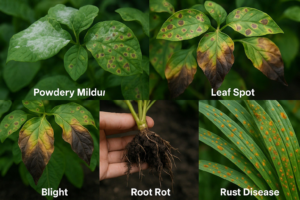
1) Powdery mildew
Powdery mildew is a damaging disease that is caused by a group of fungi, which commonly attacks crops in warm and dry climates. It is seen on plants like strawberries, apples, and grapes.
Symptoms:
- Dusty patches on the upper part of the leaves or flowers.
- Distorted or stunted leaves on lilacs or roses.
- Discoloration, such as light green or yellow spots, on leaves.
Treatment:
- Cut the infected parts of the plants.
- Use an effective fungicide until the crop cures.
- Prevent further spread by using baking soda.
2) Leaf Spot
Leaf spot disrupts the photosynthesis process in the crops and hinders their development. It damages the tissues of potato, tomato, blackgram, rice, soybean, apple, and other crops.
Symptoms:
- Black or brown spots on the trees that increase gradually.
- Yellow spots are seen on the leaves or veins of the tree.
- Immature leaf drop and continuous crop loss.
Treatment:
- Do not water the crops from above to prevent disease.
- Prune the infected branches or leaves to stop the spread.
- Use antifungal and biological remedies to treat them.
3) Blight
Leaf blight is a common plant health issue that is seen in an area with 80% humidity. It reduces a crop’s ability to perform essential functions and reduces yield over time.
Symptoms:
- Sudden yellowing and browning of the leaves.
- Dried leaves that impact the photosynthesis process.
- Leaf spots and fuzzy growth under the leaves.
Treatment:
- Avoid using diseased leaves as compost.
- Use plant protection remedies to cure them.
- Apply natural or biological treatment for disease management.
4) Root Rot
Root rot is a harmful plant health issue that targets the roots of the trees. This can reduce the life of the tree or plant and prevent it from growing, leading to its death.
Symptoms:
- The leaves turn small, yellow, pale, and brown.
- Canopy thinning and branch dieback are seen.
- Slow growth of the roots and seedling loss.
Treatment:
- Crop rotation is necessary to treat root rot.
- Increase the usage of organic materials in soil.
- Prune the already infected roots to prevent infection
5) Rust Disease
Rust is a damaging plant health issue that attacks the stems of crops. In 2024-2025, around 58% of yield loss happened in wheat and coffee due to this harmful fungal infection.
Symptoms :
- Pale leaf spots that further grow into pustules.
- Premature leaf fall results in crop loss.
- Pustules turn yellow, brown, or orange.
Treatment :
- Spray the fungicides regularly on the plants.
- Use fungicides that contain highly effective active ingredients.
- Cut the rusted canes and wait for new and healthy growth.
- You can also source high-quality fungicides and plant protection products from reliable agri-marketplaces like AgriBegri to ensure faster and more effective disease control.
Prevention Tips For Healthy And Disease-Free Plants
Here are some tips for preventing diseases in plants:
- Check plants frequently for early signs.
- Do not overwater the crops and ensure drainage.
- Prevent weeds and pests that can cause diseases.
- Use fertilizer to improve crop immunity.
- Add organic matter and improve soil health.
- Ensure crop rotation is regularly practiced.
- Use disease-resistant seeds and seedlings.
- Remove the affected parts of the plants.
How To Decide Between Chemical And Organic Disease Control?
Choosing between organic and chemical-based disease control is difficult, as both treatments have pros and cons. Let’s break it down:
Organic Disease Control :
Organic disease control is made up of natural sources such as beneficial microorganisms, minerals, organic matter, and plant extracts.
It is effective for treating common plant health issues like fungal, viral, and bacterial diseases. Neem oil, organic fungicides, and biological agents like Trichoderma species are perfect examples of organic remedies.
- Organic fungicides target specific diseases rather than broad-spectrum control.
- Organic disease control products are safe to use for the crops and the environment.
- It also helps in managing the fertility and health of the soil, as the chemical solutions usage is reduced.
Chemical Disease Control :
Chemical disease control products are made up of toxic and non-toxic metal compounds that are powerful for curing plant health issues.
Chemical fungicide targets a wide range of fungal diseases, including rust, leaf spot, powdery mildew, and others on multiple crops.
- It provides immediate disease relief at your farm after some hours of application.
- If the usage of this treatment is increased, it can target the beneficial organisms in the soil and reduce soil fertility over time.
- Chemical disease control often requires a few applications, and they are cost-effective to use.
Both types of disease control are beneficial as well as harmful for crop yield.
It depends on the usage of the product as per the recommendations. You can use the one that suits you best for your farm.
Conclusion :
Plant health issues can be transmitted to the crops by insects, viruses, nematodes, weeds, and other environmental conditions.
Diseases have the ability to ruin the harvest if the precautions are not taken. Knowing the early signs of plant diseases allows you to take preventive measures.
This helps in keeping crops safe from fungal and bacterial infection. You can choose organic or chemical treatments for productive, disease-free growth. Following these steps yields a vibrant, healthy crop.